
Mon Repos Turtle Centre: Everything You Need to Know
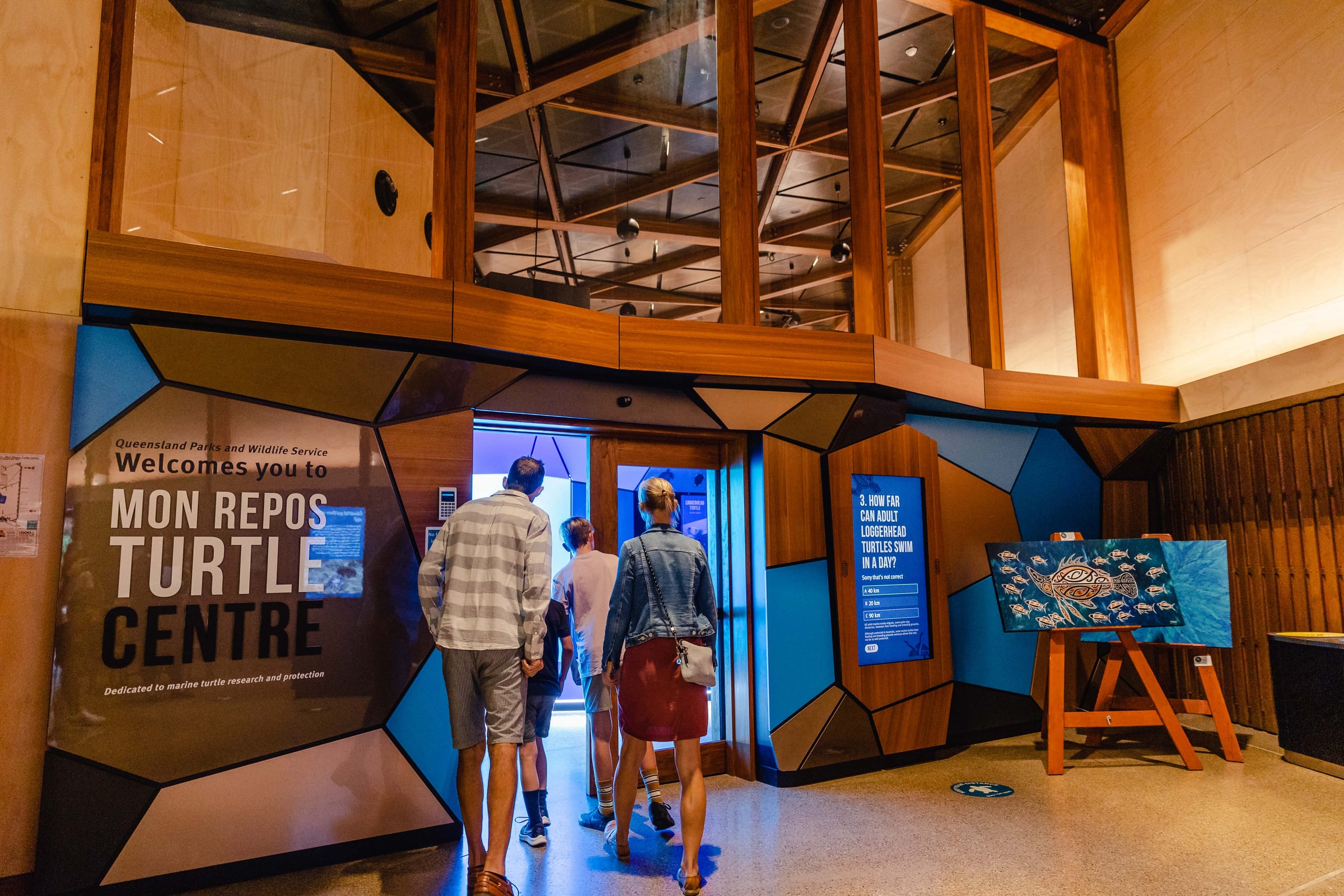
Mon Repos Conservation Park — at Bargara, 15 kilometres east of Bundaberg — is the most significant loggerhead turtle nesting site on the eastern Australian mainland and the site of Queensland's most emotionally powerful wildlife experience. The Mon Repos Turtle Centre's nightly encounter programme, operating November through March, guides visitors to the beach to observe nesting females (November–January) or hatchling emergence (January–March) in a tightly managed, conservation-led experience. For Bundaberg region visitors, Mon Repos is the experience around which the itinerary should be built.
The Turtle Species
Mon Repos hosts primarily loggerhead turtles (Caretta caretta) — one of the world's largest hard-shelled sea turtle species, adults reaching 100kg and 80–110cm in shell length. The site also hosts green turtles and occasional flatback turtles. The loggerhead's eastern Australian population has its primary nesting concentration at Mon Repos, making the site critical to the species' regional recovery. Female loggerheads return to the beach where they hatched — a natal homing behaviour whose navigational precision, after decades in the open ocean, remains one of biology's more remarkable phenomena.
The Nesting Experience (November–January)
The programme runs from approximately 7pm nightly. Visitors gather at the Turtle Centre, receive the conservation briefing, and are guided to the beach in small groups when a nesting female is detected by rangers. The female's emergence, site selection, digging, laying of 100–130 eggs, covering, and return to the sea takes 1.5–2 hours — the visitor group observes from a careful distance under ranger supervision, using no lights, no flash photography, and no interference. The emotional impact of observing a 100kg ancient reptile fulfilling her biological imperative metres away — in near darkness — is uniformly described as one of Australia's most powerful wildlife encounters.
The Hatching Experience (January–March)
The hatchling emergence programme operates differently: the rangers monitor nests nightly, and when emergence begins, booked visitors receive notification — which may arrive at any hour, including 2am or 3am. Watching dozens of palm-sized hatchlings emerge from sand and navigate instinctively to the moonlit ocean is described by those who witness it as among the most profound natural experiences Queensland tourism provides. The accommodation whose kitchenette provides the 4am fuel and whose on-site management supports the midnight departure is the accommodation Mon Repos hatching visitors should choose.
Booking and Logistics
Booking is essential through the Queensland Parks and Wildlife Service booking system. Peak December–January dates sell out weeks or months ahead — book the turtle experience first, then arrange accommodation around the confirmed date. The programme admits groups; individuals join the guided group. The experience is weather-dependent but cancellations are rare. Tickets are non-refundable if turtle activity doesn't occur on the booked night (natural behaviour cannot be guaranteed).
What to Bring
Dark, quiet clothing. Insect repellent (sandflies are active in warm months). Closed-toe shoes. No torches — the ranger provides the only light source. No flash photography. A light jacket for the ocean breeze after 9pm. Pre-programme dinner at 5:30pm from the kitchenette (no restaurant serves at 11pm when the programme concludes). Post-programme kitchenette snack at midnight.
Conservation Significance
Mon Repos has been continuously researched and monitored since 1968 — the longest continuous sea turtle research programme in the southern hemisphere. The Turtle Centre (opened 2009) replaced the ad-hoc visitor access that earlier decades required removing for conservation management. The result is a wildlife experience whose conservation credibility is as high as its emotional impact. The loggerhead population's recovery from near-extinction-level pressures in the mid-20th century is, in part, a consequence of the sustained research and protection the Mon Repos programme has provided.
Planning Around Mon Repos
The two-night Bundaberg stay built around the turtle booking provides the comfortable schedule: Day 1 afternoon arrival, Bargara Beach, early dinner; Day 1 evening turtle programme; Day 2 recovery morning, rum distillery afternoon; Day 3 departure. The visitor who attempts to combine the turtle experience with a 5am Lady Musgrave departure the following morning has misunderstood the sleep requirements the midnight turtle return generates.
Burnett Riverside — Mon Repos Proximity
Burnett Riverside is 20 minutes from Mon Repos. The kitchenette provides the pre-programme dinner, the midnight return snack, and the 3am hatching-notification breakfast. Book directly at burnettriverside.com.au.
Understanding Turtle Behaviour at Mon Repos
Loggerhead turtles return to the beach where they were born to lay eggs — a behaviour called natal homing. Mon Repos hosts the largest loggerhead nesting aggregation in the South Pacific. Individual turtles nest multiple times per season (typically 3–5 times at 2-week intervals), producing clutches of 100–130 eggs each time. Incubation takes approximately 8 weeks, after which hatchlings emerge — usually at night — and make for the ocean. Temperature determines sex: warmer nests produce more females. Rangers have been monitoring the Mon Repos population since the 1960s and can tag individual turtles for return identification — some individuals have been observed nesting at Mon Repos for over 30 years.
Responsible Wildlife Viewing at Mon Repos
Mon Repos operates under strict protocols designed to avoid disrupting nesting and hatching behaviour. Photography with flash is prohibited on the beach. Red-light torches are used by rangers to minimise light impact. Visitors are briefed in the Discovery Centre before beach access and are accompanied by a ranger throughout the beach visit. Group sizes on the beach are managed to minimise disturbance. The protocols exist because light, noise, and vibration can cause nesting turtles to abort and return to the ocean without completing the nesting process. Following ranger instructions precisely ensures the encounter doesn't come at a cost to the animal being observed.
What to Do If Your Turtle Session Is Cancelled
Mon Repos rangers cannot guarantee a turtle encounter — turtle activity depends on conditions the ranger cannot control. If no turtles emerge during your booked session, or if beach conditions preclude beach access, rangers will either issue a rain check for another night or offer information about the program's cancellation policy. The Discovery Centre programme and ranger presentation run regardless of beach conditions and are genuinely informative. Booking for multiple nights when the turtle encounter is the primary reason for your Bundaberg visit reduces the risk of missing out — rangers can advise on which nights in the current season are showing highest activity.
Stay at Burnett Riverside
Burnett Riverside Hotel provides the accommodation base that makes the most of everything Bundaberg has to offer. Every room includes a full kitchenette, the outdoor pool is open year-round, commercial-grade WiFi supports both leisure and work stays, secure undercover parking is included at no extra cost, and on-site management is available seven days a week. The hotel sits on the Burnett River, minutes from the CBD and within easy driving distance of every attraction and destination covered in this guide. Book directly at burnettriverside.com.au for the best available rate with no third-party booking fees or surcharges.